Charlie Munger’s Blueprint for Rational Thinking
Every month, I’ll be writing about one of my favourite books — not just summarizing it, but exploring the ideas, frameworks, and lessons that make it memorable. Some books change the way we think about money, some reshape how we see people, and others quietly alter how we approach life itself. My hope is that these articles feel less like formal reviews and more like an ongoing conversation about ideas worth sharing.
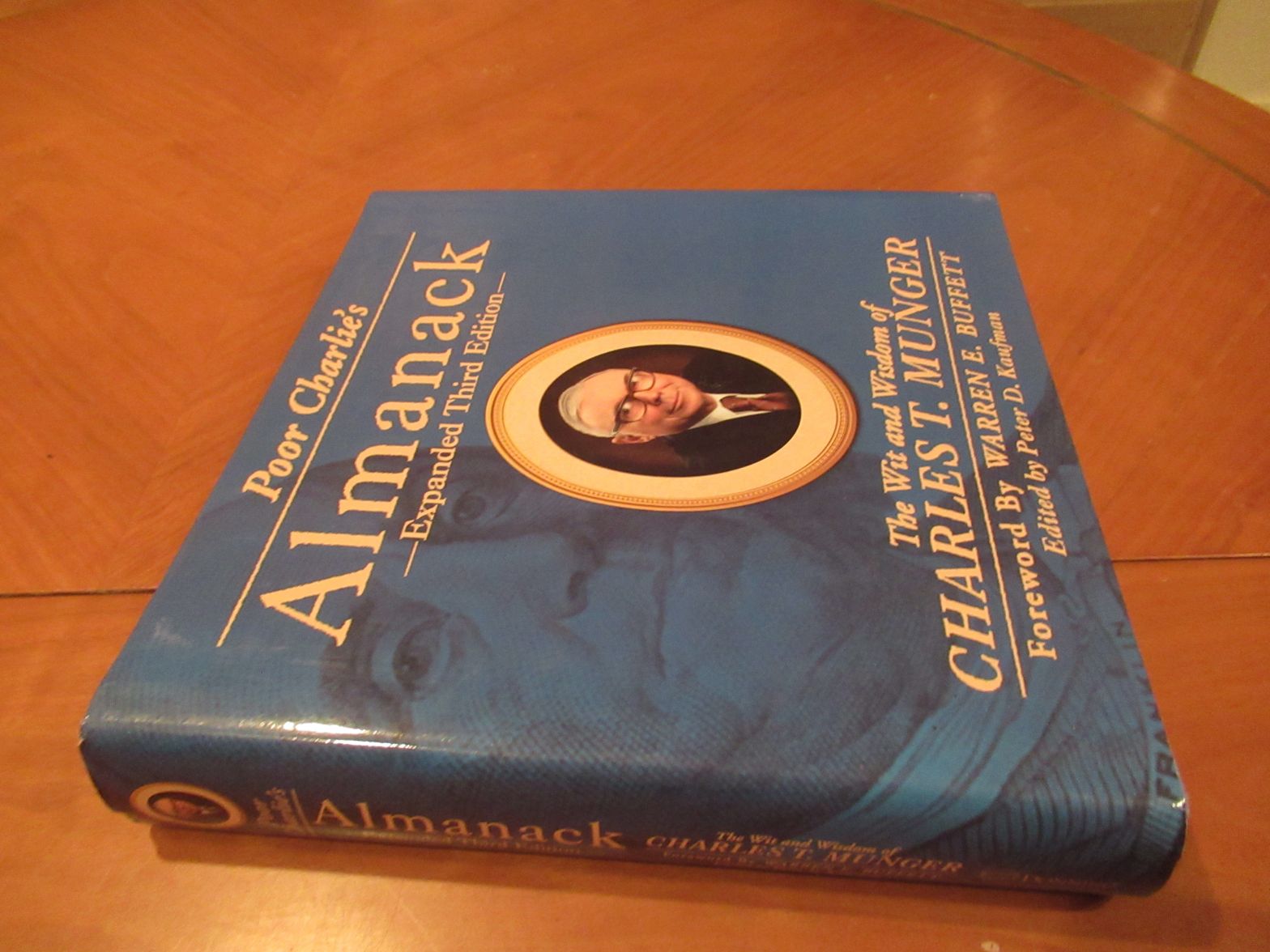
I’d love for readers to engage along the way: disagree with points, add your own interpretations, recommend books, and most importantly, have fun with it. Great books are meant to spark curiosity, and this series is really about exploring that curiosity together. For the first entry, I’ve chosen a book that has become almost legendary in investing and decision-making circles: Poor Charlie’s Almanack by Charlie Munger.
The Book Beyond Investing
Poor Charlie’s Almanack is more than an investing book. It is a collection of speeches, lectures, and reflections from legendary investor Charlie Munger, best known as the longtime business partner of Warren Buffett at Berkshire Hathaway. While the book discusses markets and business extensively, its real subject is decision-making. Munger’s central claim is that most people fail because they think too narrowly, act emotionally, and misunderstand the incentives shaping the world around them.
The book blends psychology, economics, mathematics, philosophy, and practical wisdom into a single framework for living rationally. Rather than offering formulas for getting rich quickly, Munger argues that success comes from building good judgment over decades.
The Latticework of Mental Models
One of Munger’s most famous ideas is the concept of a “latticework of mental models.” He argues that reality is too complex to understand through a single discipline. Specialists often become trapped in their own frameworks, trying to explain every problem through the lens of economics, law, engineering, or psychology alone.
Munger believes the best thinkers borrow ideas from many different fields and connect them together. A person who understands probability, incentives, human psychology, systems theory, and history simultaneously will usually make better decisions than someone who only understands one area deeply.
This multidisciplinary approach is one of the defining features of the book. Munger encourages readers to study broadly because the world itself is interconnected. Knowledge compounds when ideas from different disciplines reinforce one another.
Incentives Drive Human Behavior
Few concepts appear more often in the book than incentives. Munger repeatedly emphasizes that incentives shape outcomes far more powerfully than people realize. His famous quote, “Show me the incentive and I’ll show you the outcome,” captures this philosophy perfectly.
He argues that many irrational or unethical behaviors are not caused by evil intentions alone, but by systems that reward bad conduct. Executives manipulate numbers because bonuses depend on short-term performance. Salespeople oversell products because commissions encourage them to close deals regardless of long-term consequences.
Munger treats incentives almost like a law of physics. If a system rewards certain behaviors consistently, people will eventually adapt themselves to maximize those rewards. Understanding this principle allows investors, managers, and policymakers to predict behavior more accurately.
Human Misjudgment and Cognitive Bias
A major section of Poor Charlie’s Almanack focuses on the flaws in human thinking. Munger believed that the human brain is filled with predictable biases that distort judgment.
People imitate crowds through social proof. They cling to previous commitments even when evidence changes. They become overconfident after success and envious when comparing themselves to others. Authority figures can influence behavior irrationally, and emotional attachment often overrides logic.
These ideas overlap strongly with Thinking, Fast and Slow by Daniel Kahneman, although Munger’s approach feels more practical and less academic. He does not simply identify biases; he asks how we can defend ourselves against them.
For Munger, rationality is not natural. It is a discipline that must be deliberately cultivated.
Inversion: Avoiding Stupidity
One of Munger’s simplest yet most powerful tools is inversion. Instead of constantly asking how to succeed, he recommends asking how to avoid failure.
Rather than searching for brilliance, people should first eliminate obvious sources of ruin. In investing, this means avoiding permanent losses of capital and excessive debt. In life, it means staying away from destructive habits, toxic environments, and emotionally driven decisions.
Munger admired the mathematician Carl Jacobi, who advised thinkers to “invert, always invert.” The principle sounds simple, but it changes how problems are approached. Often the path to success is clearer when viewed from the opposite direction.
This mindset also reflects Munger’s realism. He does not believe humans can perfectly predict the future, but he does believe they can systematically avoid avoidable mistakes.
Patience and Long-Term Thinking
Modern financial culture rewards activity. Investors are encouraged to trade constantly, react to news, and chase trends. Munger strongly rejects this mindset.
He believed the greatest opportunities are rare. Most of the time, intelligent investors should wait patiently and act only when the odds are overwhelmingly favorable. Once such an opportunity appears, however, they should act decisively.
This philosophy helped shape Berkshire Hathaway’s investment style. Instead of endlessly buying and selling, Buffett and Munger concentrated capital into businesses they deeply understood and trusted over long periods.
Munger also pushed Buffett toward buying exceptional companies rather than merely cheap ones. A high-quality business with durable advantages can compound wealth internally for decades. Time becomes an ally rather than an enemy.
The Power of Compounding
Compounding appears throughout the book not only as a financial principle, but as a philosophy of life.
Munger believed that small improvements accumulated consistently over time produce extraordinary results. Reading every day, refining judgment, building relationships, and learning continuously may seem insignificant in the short term, but over decades these habits create enormous advantages.
This idea explains Munger’s obsession with lifelong learning. He famously claimed that he rarely encountered wise people who did not read constantly. Knowledge compounds exactly the way capital does.
Importantly, the compounding process also works negatively. Small bad habits, poor incentives, or repeated irrational decisions eventually create severe consequences. Tiny errors repeated over time become catastrophic.
Staying Inside Your Circle of Competence
Another central lesson from the book is the importance of understanding the limits of your own knowledge.
Munger argues that people get into trouble not because they know too little, but because they confidently operate outside their expertise. The solution is not to become an expert in everything, but to clearly define one’s “circle of competence.”
Within that circle, a person may possess genuine insight. Outside it, they should act cautiously and remain intellectually humble.
This principle is especially relevant in investing and business, where overconfidence often leads people into industries or technologies they barely understand. Munger saw humility as a competitive advantage because so few people are willing to admit uncertainty.
Ethics, Reputation, and Trust
Although Munger is often discussed as an investor, the book contains a surprisingly strong moral dimension.
He repeatedly emphasizes the importance of integrity, trustworthiness, and long-term reputation. Businesses built on manipulation or deception may succeed temporarily, but eventually their contradictions catch up with them.
Munger believed ethical behavior was not merely virtuous — it was practical. Trust compounds over time. A reputation for honesty creates opportunities, partnerships, and resilience that cannot easily be measured on a balance sheet.
This long-term orientation separates Munger from purely transactional thinkers. He viewed character as an asset.
Why the Book Still Matters
The enduring appeal of Poor Charlie’s Almanack comes from its realism. Munger does not promise shortcuts or magical formulas. Instead, he presents rationality as a lifelong practice requiring discipline, self-awareness, patience, and humility.
The book’s lessons extend far beyond finance. Its ideas apply to management, politics, technology, relationships, and personal development. In a world filled with noise, emotional reactions, and distorted incentives, Munger argues that clear thinking itself becomes a rare competitive advantage.
Ultimately, the book is about building a durable operating system for navigating complexity. Charlie Munger’s greatest legacy may not be the fortune he helped build, but the framework he left behind for thinking clearly in an irrational world.
 Invest Today